- 1
- BLACKL
- TABLETAPPLE iPad Mini 8NEW iPad A16(2025) iPad 10.9" 10th (2022) iPad 10.2" (7th/8th/9th) iPad Air 13" (M2/M3/M4)(2024/2025/2026)NEW iPad Air 11" (M2/M3/M4)(2024/2025/2026)NEW iPad Mini 8.3" (A7 Pro/6th Gen) iPad Pro13"(M4/M5)(2024/2025) iPad Pro11"(M4/M5)(2026) iPad 9.7" (5th/6th Gen) iPad Pro 12.9"(2018-2022) iPad Pro 11"(2018-2022) iPad 9.7"(2th/3th/4th) iPad Air 10.9"(4th/5th Gen) iPad Mini 7.9"(4th/5th Gen)SAMSUNG Galaxy Tab A11 Galaxy Tab A11 Plus Galaxy Tab S11 Galaxy Tab S12 PlusNEW Galaxy Tab S12 UltraNEW Galaxy Tab A9+ Galaxy Tab A9 Galaxy Tab A8 Galaxy Tab A7 Galaxy Tab A7 Lite Galaxy Tab S11 Ultra/S10 Ultra/S9 Ultra/S8 Ultra Galaxy Tab S10+/S9+/S9 FE+ Galaxy Tab S10Lite/S10 FE/S9 FE/S9 Galaxy Tab S8+/S7+/S7 FE Galaxy Tab S8/S7 Galaxy Tab S6 lite Galaxy Tab A10.1 Galaxy Tab A8.4 Galaxy Tab A8.0 Galaxy Tab S10 FE+LENOVO iDea tab 11/Tab K11 Gen 2 /Xiaoxin Pad 11 2025 Lenovo Tab K9 (Tab One) 2025 Lenovo Tab M10 10.1"(2025) Lenovo Tab M10 Plus 10.6" (3rd Gen) Lenovo Tab M10 HD 10.1" (3rd Gen) Lenovo K10/M10 Plus 10.3" (2nd Gen) Lenovo Tab M10 HD 10.1" (2nd Gen)XIAOMI Redmi Pad 2 9.7 InchNEW Xiaomi Pad8/8Pro 11.2" Redmi Pad2/Pad2.4G Xiaomi Pad 6/6 Pro 11" Redmi Pad 10.61" Redmi Pad Se 11" Redmi pad Se 4G 8.7" Xiaomi Pad7/7 Pro 11.2" Redmi Pad Pro/Xiaomi Poco Pad/Redmi Pad2 Pro 12.1HUAWEI Huawei Matepad Se 10.4" Huawei Matepad 11" Huawei Matepad 11.5" Huawei Matepad SE 11" Huawei Matepad T8 8" Huawei Matepad T10 9.7"
- CATEGORIES

Material Strategy for Better Tablet Case Grip, Flexibility, and Stand Performance
Every tablet case begins with material decisions. A design may look strong in pictures, but real performance depends on how the shell, frame, corner structure, grip surface, and stand mechanism work together. As tablets are used in classrooms, warehouses, clinics, retail stores, and service vehicles, buyers need cases that feel comfortable in the hand while still protecting expensive devices from daily impact. That balance starts with material strategy.
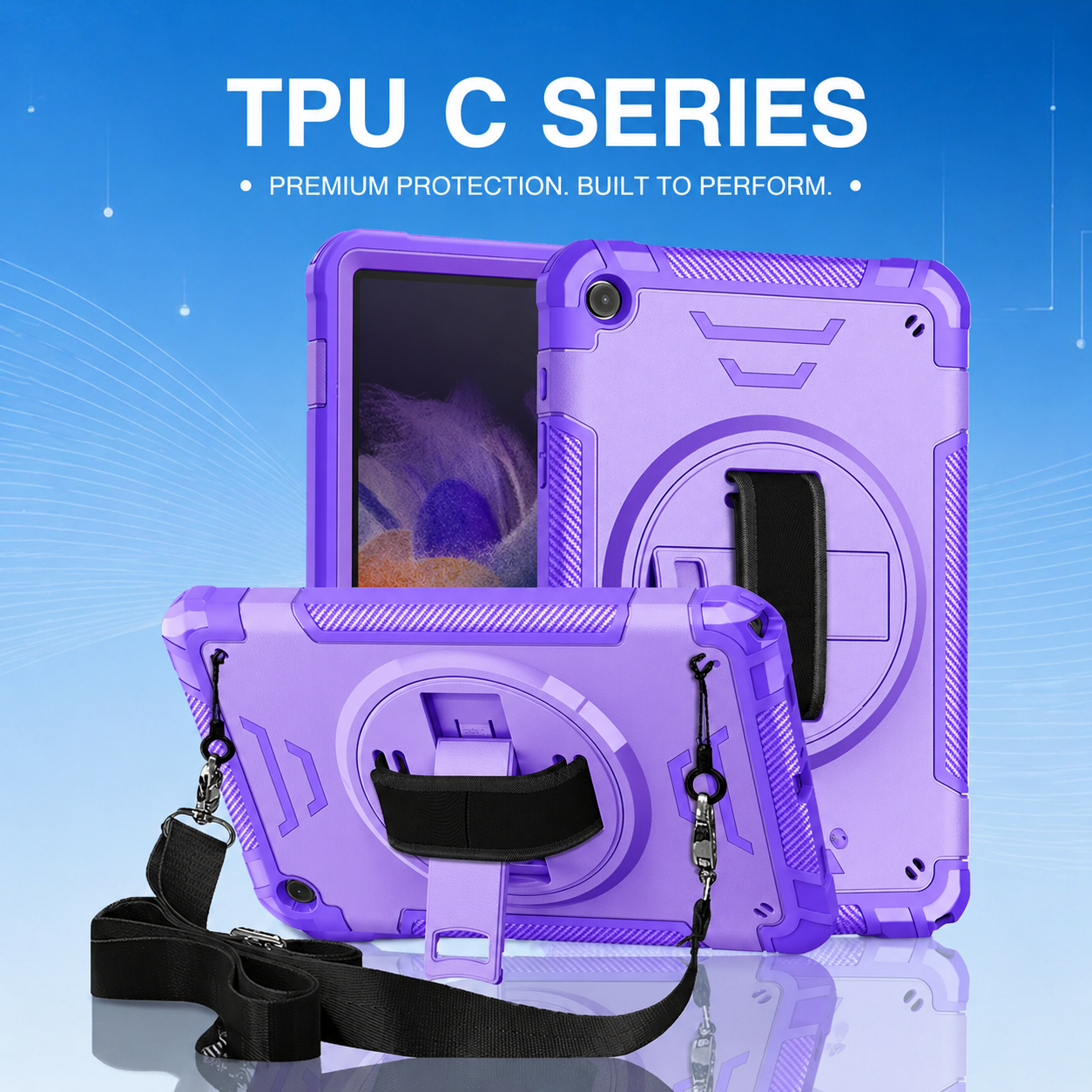
A TPU tablet case is often valued for flexibility and shock absorption. TPU can wrap around edges, cushion corners, and create a comfortable anti-slip surface. It is useful for users who carry tablets often, because it provides a softer touch than hard plastic and helps reduce the risk of slipping from the hand. In many designs, TPU is used around the outer bumper or internal frame to absorb the first force of a drop.
Why flexible materials still need structure
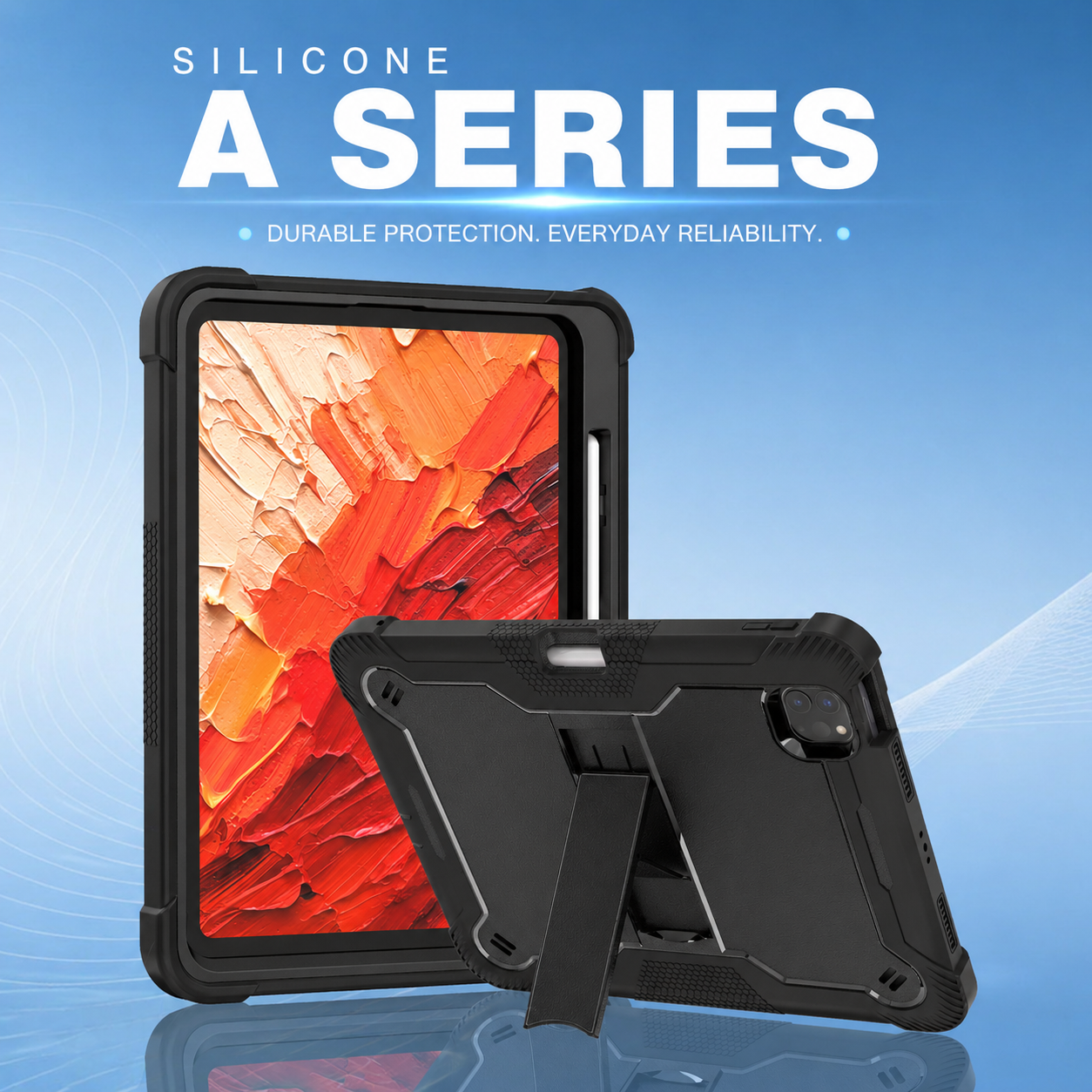
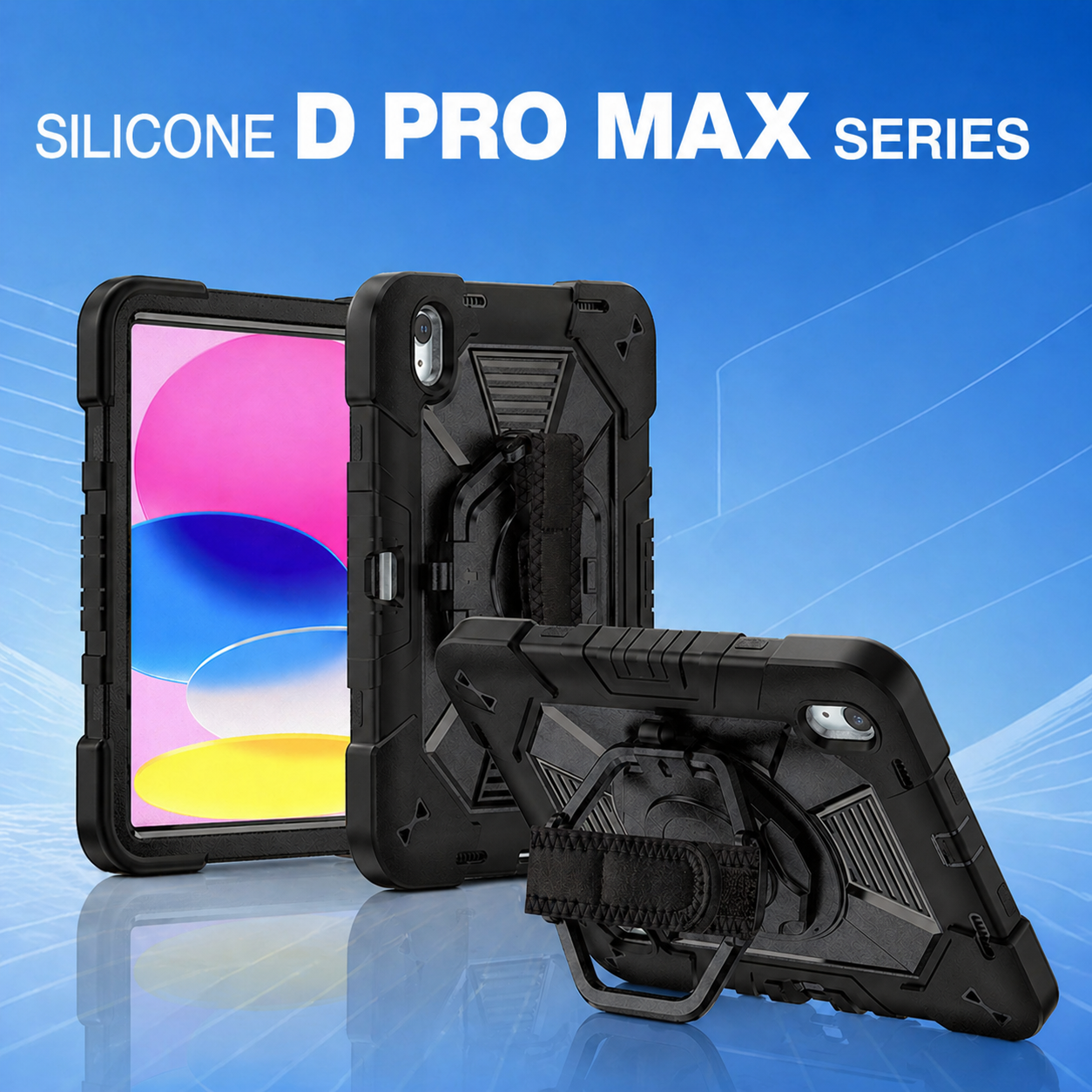
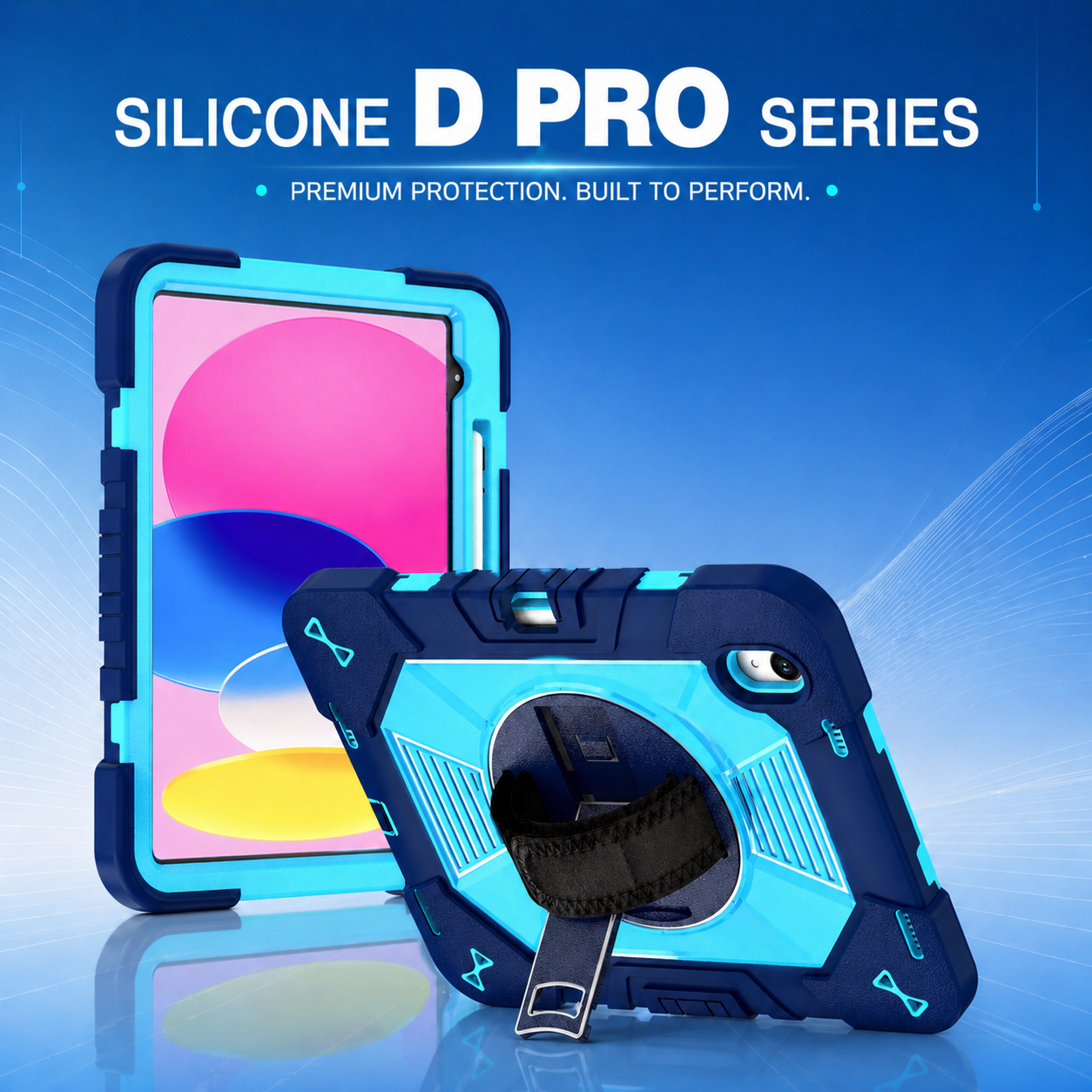
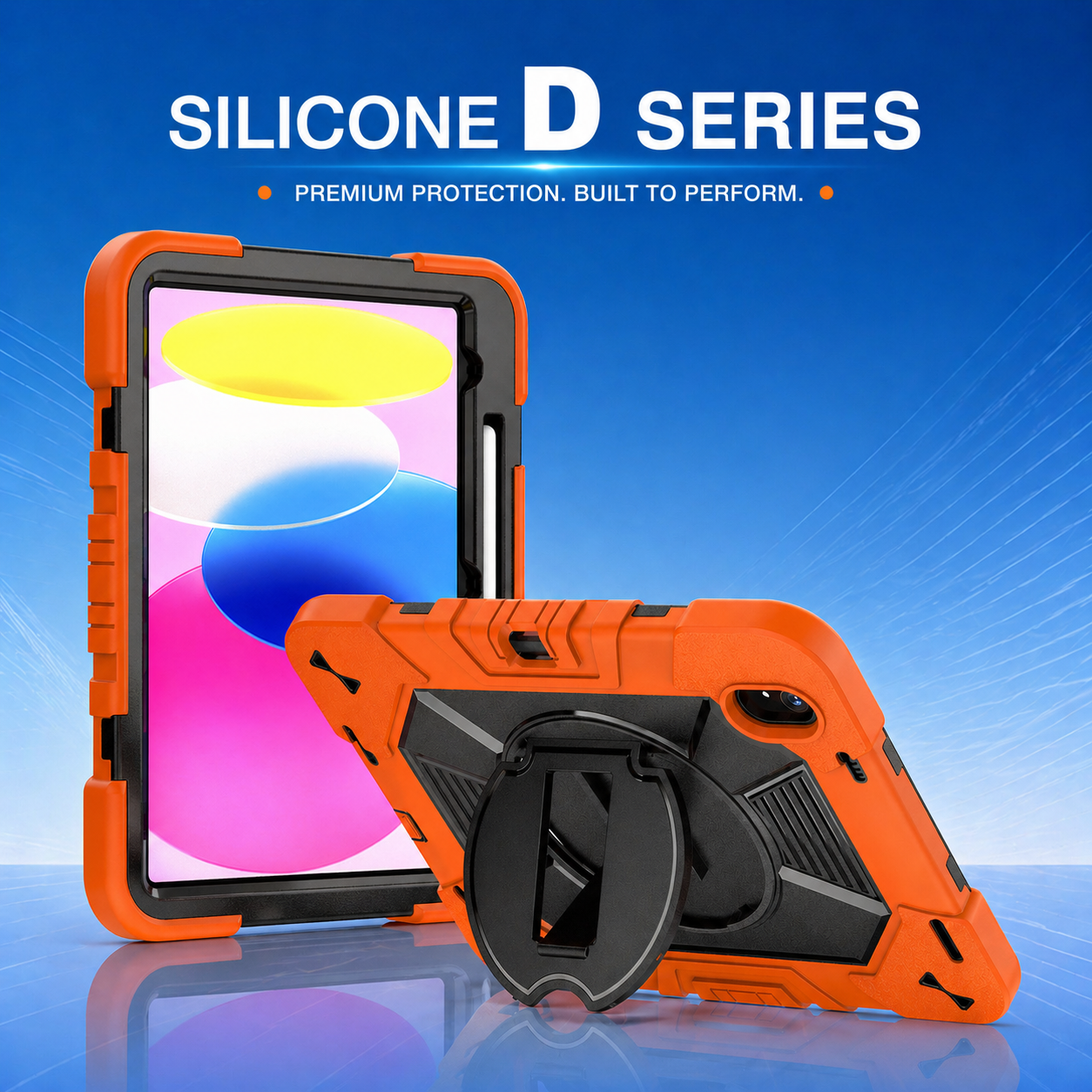
Flexibility alone is not enough. If a case is too soft, it may twist, loosen, or fail to support a kickstand properly. This is why many advanced tablet cases combine soft and hard materials. A hard PC shell can provide shape and stability, while silicone or TPU can absorb impact and improve grip. A well-designed PC+Silicone tablet case uses this combination to deliver protection without making the case feel overly rigid or uncomfortable.
The relationship between hard and soft layers is especially important near the corners. Tablet corners are common impact points, so they need extra cushioning. However, the case must still keep the screen aligned and the device secure. When the case includes a rear stand, the back plate also needs strength. The stand cannot perform well if the rear surface bends too much. This is one reason hybrid structures are popular in the rugged tablet case market.
Stand performance depends on the back structure
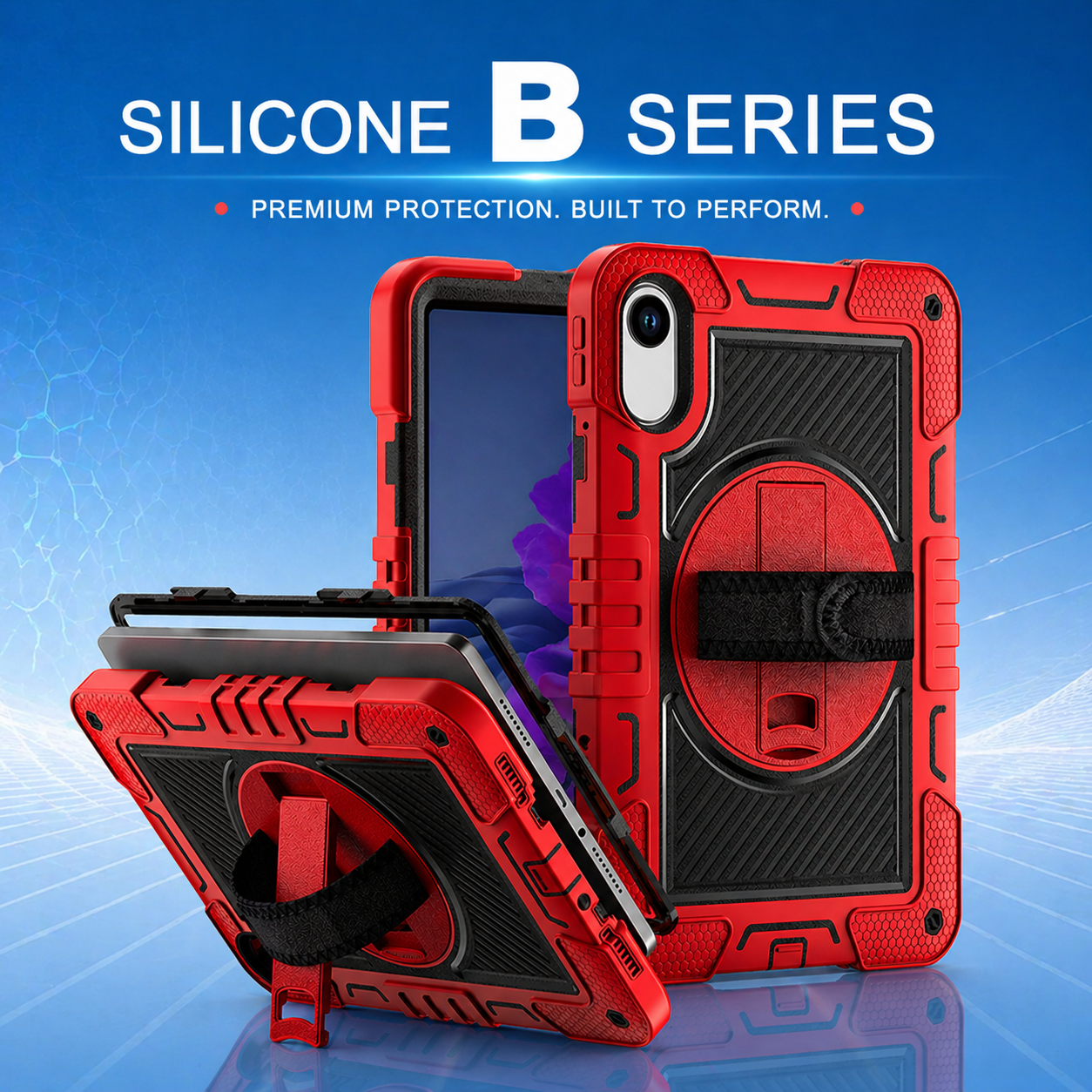
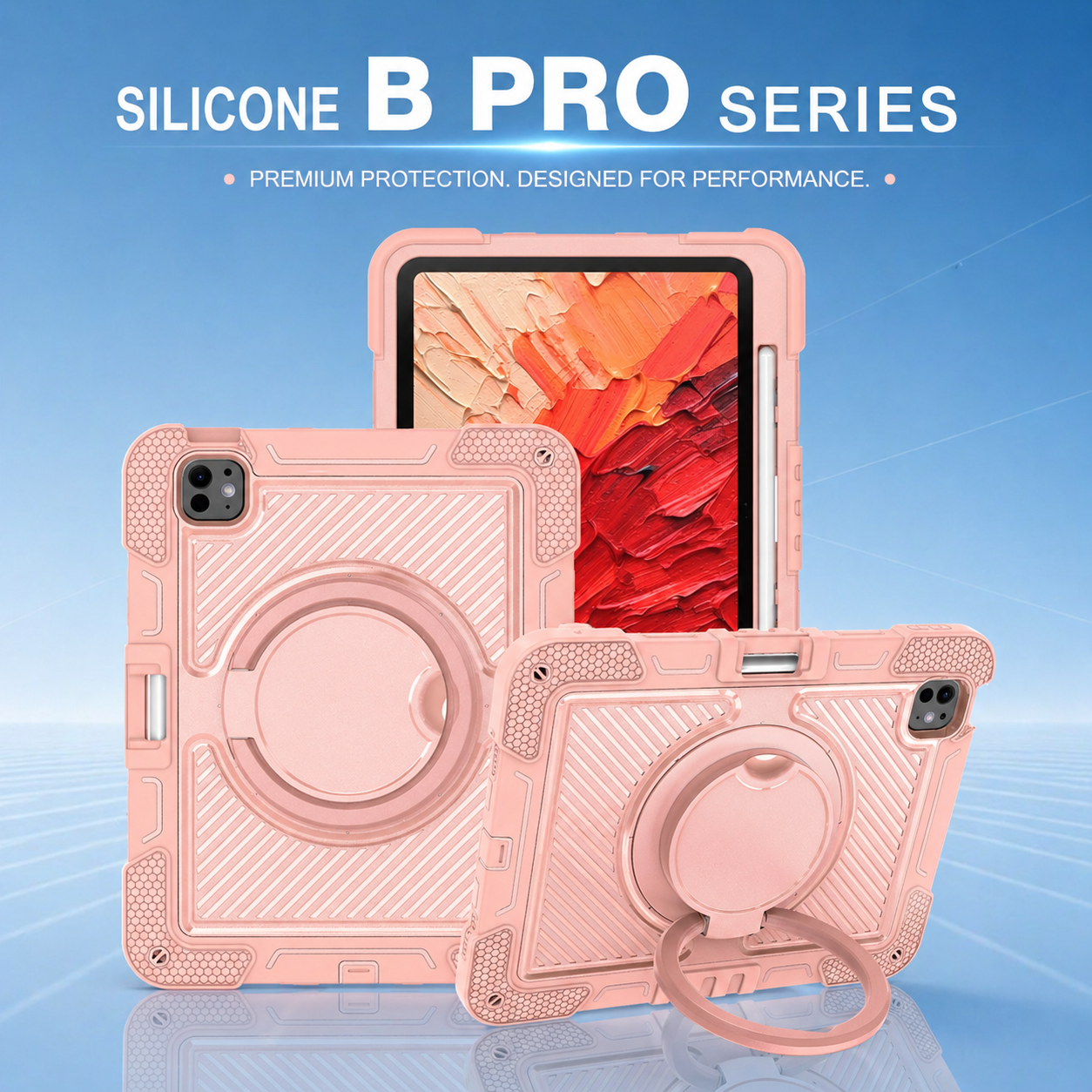
A stand system adds more engineering requirements. The bracket, hinge, rotation disc, and lock points all transfer pressure into the case body. A multi angle kickstand tablet case must hold different viewing positions for typing, reading, video calls, display counters, or classroom activities. If the base material is weak, the stand may wobble or wear out quickly. If the material is too hard without shock absorption, the case may crack under impact.
The best designs solve this problem by reinforcing the back plate while maintaining soft protective edges. This makes the case stable on a desk and reliable in the hand. A stand should not feel like an extra part added at the end of development. It should be integrated into the case structure from the start. The location of the hinge, the thickness of the stand arm, and the balance of the tablet all affect the user experience.
Grip texture is part of protection
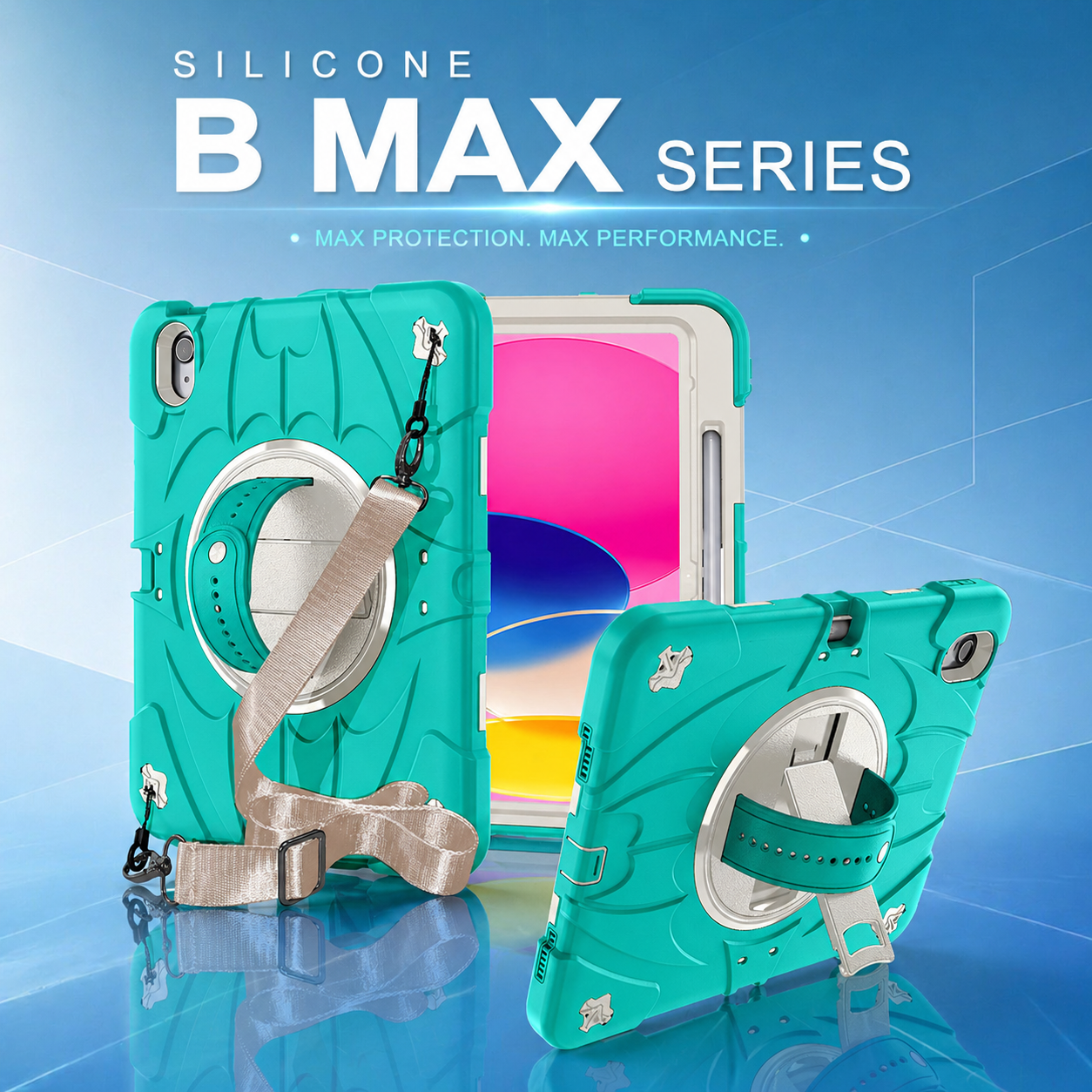
Protection is not only about surviving a drop. It is also about preventing drops before they happen. Material texture plays a major role. A smooth hard case may look clean, but it can become slippery in kitchens, classrooms, warehouses, and outdoor environments. A textured TPU tablet case can improve holding confidence, especially when paired with a hand strap. The user can move with the tablet, rotate it, scan data, or show information to another person with less risk.
For children, grip texture is even more important. Kids often hold tablets at odd angles, place them on floors, and move quickly between activities. For industrial workers, gloves can reduce tactile control, so anti-slip surfaces help maintain a secure grip. In healthcare, material must also support cleaning and repeated handling. Therefore, the right surface finish is not a minor detail; it is a practical design factor for different customer groups.
Weight, thickness, and comfort must be balanced
Buyers often want maximum protection and minimum weight at the same time. This is difficult but possible through thoughtful material placement. Reinforcement should be concentrated in high-risk areas such as corners, screen edges, stand joints, and strap anchors. Other areas can be slimmer to reduce fatigue. A heavy case may protect well, but if users remove it because it is uncomfortable, the protection fails in real life.
A strong PC+Silicone tablet case can be designed with targeted protection zones instead of unnecessary bulk everywhere. This approach keeps the device easier to carry while still improving drop resistance. The same principle applies to the stand. A multi angle kickstand tablet case should support several positions, but its hinge and bracket must stay compact enough for daily use. Smart engineering is about putting strength where the user actually needs it.
Material choices influence brand value
For tablet case suppliers and OEM manufacturers, material quality affects customer trust. A case that becomes loose, sticky, brittle, or cracked after short use damages the product reputation. Consistent materials, precise molding, strong assembly, and reliable testing all support long-term value. Commercial buyers are not only purchasing a case; they are reducing device repair cost and improving user efficiency.
Material strategy is therefore part of business strategy. Schools want durable cases that survive student handling. Warehouses want cases that support scanning, standing, and movement. Retail teams want a case that looks professional at the counter. Field teams want a protective cover that can handle outdoor conditions. One design may not fit every situation, but the right material platform can be adapted for many tablet models and use cases.
Conclusion
The tablet case industry is moving toward hybrid materials because users need protection, comfort, and functional support in one product. TPU provides flexibility and grip, PC adds structure, silicone improves shock absorption, and thoughtful stand integration turns a case into a working tool. When these elements are designed together, the final product becomes stronger, easier to use, and more valuable for both personal and business tablet users.
Next related focus: Kids learning, shockproof design, and full body protection for iPad tablet use






.png)
+86 13422271740
.png)
info@tongmeitech.com
.png)
No. 34, Mashe Section, Guihe Road, Lishui Town, Foshan, Guangdong, China